
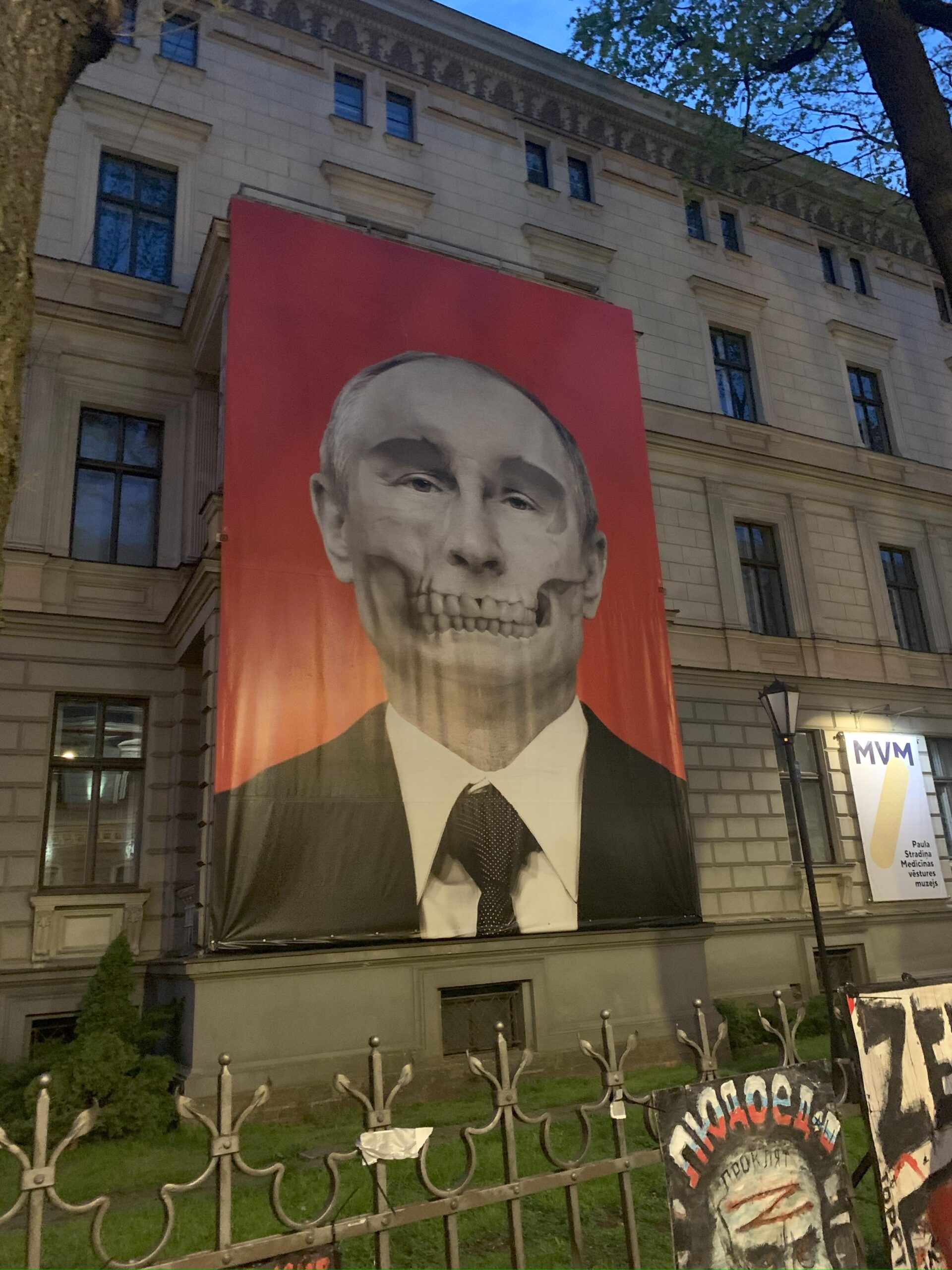
The Distortion of History by Authoritarian Leaders: Putin’s Justification for the Invasion of Ukraine
History has long been a powerful tool in the hands of authoritarian leaders, used to justify their actions, consolidate power, and shape public perception. Vladimir Putin’s manipulation of history to justify Russia’s invasion of Ukraine is a stark example of this tactic. By distorting historical narratives, Putin has sought to legitimize his aggressive policies, rally domestic support, and undermine the sovereignty of Ukraine. This commentary explores how Putin’s use of history as a political weapon not only distorts the past but also poses a serious threat to international stability and the principles of national self-determination.
The Historical Narrative of Russian-Ukrainian Relations
Putin’s narrative surrounding Ukraine is deeply rooted in a selective and distorted interpretation of history. Central to his justification for the invasion is the claim that Ukraine is not a legitimate, independent nation but rather an integral part of a greater Russian world, or Russkiy mir. This concept, which harks back to the days of the Russian Empire and the Soviet Union, is used to assert that Ukrainians and Russians are “one people,” with a shared history, culture, and destiny.
Putin has repeatedly invoked the historical unity of Russia and Ukraine, citing the medieval state of Kievan Rus as evidence of their common origins. By doing so, he attempts to erase the distinct identity and history of the Ukrainian people, reducing Ukraine to a mere extension of Russia. This narrative ignores the centuries of Ukrainian struggle for autonomy, the development of a unique Ukrainian culture and language, and the brutal repression of Ukrainian nationalism under Russian and Soviet rule.
Moreover, Putin’s historical revisionism extends to the events of the 20th century. He downplays or outright denies the impact of policies like the Holodomor, the man-made famine in Soviet Ukraine during the 1930s, which resulted in the deaths of millions of Ukrainians. Instead, he portrays the Soviet era as a time of brotherhood and unity, conveniently omitting the suffering and resistance that characterized Ukraine’s relationship with Moscow.
The Use of History to Justify Aggression
Putin’s distortion of history is not merely an academic exercise; it serves a clear political purpose. By framing Ukraine as historically and culturally Russian, he attempts to delegitimize the very idea of Ukrainian statehood. This narrative provides a pretext for Russia’s actions, portraying the invasion as a defensive move to “reclaim” territory that rightfully belongs to Russia. In this context, the annexation of Crimea in 2014 and the ongoing conflict in Eastern Ukraine are presented not as acts of aggression, but as necessary measures to protect Russian-speaking populations and restore historical justice.
This misuse of history also plays a critical role in shaping public opinion within Russia. The Kremlin has aggressively promoted this narrative through state-controlled media, education, and cultural initiatives, cultivating a sense of nostalgia for the Soviet past and a belief in Russia’s destiny as a great power. By fostering a historical myth of Russian-Ukrainian unity, Putin seeks to rally domestic support for his policies, even in the face of economic hardship and international condemnation.
The distortion of history is further used to discredit Ukraine’s post-Soviet independence and its aspirations to align more closely with Western Europe. By portraying the 2014 Maidan Revolution, which led to the ousting of Ukraine’s pro-Russian president, as a Western-backed coup, Putin casts Ukraine’s democratic aspirations as illegitimate and foreign-imposed. This narrative not only justifies Russia’s intervention but also frames the conflict as a struggle against Western encroachment, rather than a fight for Ukrainian sovereignty.
The Dangers of Historical Revisionism
The use of distorted history by authoritarian leaders like Putin poses significant dangers, both for the countries involved and for the broader international community. First and foremost, it undermines the principles of national self-determination and sovereignty. By denying Ukraine’s right to exist as an independent nation, Putin’s narrative justifies not only the current conflict but also potential future aggressions against other neighboring states with historical ties to Russia.
This historical revisionism also fuels a dangerous form of nationalism that glorifies imperial ambitions and justifies the use of force to achieve them. By invoking a mythologized past, Putin seeks to create a sense of inevitability about Russia’s actions, portraying them as part of a historical continuum rather than as choices with real and devastating consequences.
On the international stage, the distortion of history complicates diplomatic efforts to resolve the conflict. When historical myths are used to justify aggression, it becomes more challenging to engage in meaningful dialogue or to reach a peaceful resolution. This creates a cycle of hostility and mistrust that can prolong conflicts and destabilize entire regions.
Moreover, the manipulation of history by authoritarian leaders like Putin sets a dangerous precedent. If unchecked, it could encourage other regimes to similarly distort historical narratives to justify their own aggressive actions, further eroding the international order based on respect for borders, sovereignty, and the rule of law.
Vladimir Putin’s use of history to justify the invasion of Ukraine is a clear example of how authoritarian leaders can weaponize the past to serve their political agendas. By distorting historical facts and promoting a revisionist narrative, Putin seeks to legitimize Russia’s aggression, undermine Ukrainian sovereignty, and rally domestic support for his policies. This manipulation of history not only distorts the truth but also poses a serious threat to international stability and the principles of self-determination and sovereignty. As the conflict in Ukraine continues, it is crucial for the international community to recognize and challenge these distorted narratives, reaffirming the importance of historical accuracy and the rights of nations to chart their own futures free from external coercion.