By Greg Scott
The Imperative of Foreign Policy in Supporting Democracies and Global Alliances
In a world where authoritarian regimes threaten the stability and freedom of independent nations, the foreign policies of democracies like Canada and the United States are more critical than ever. Supporting other democracies and strengthening alliances such as NATO are essential in maintaining a free, liberal, and democratic global order. History teaches us that when democracies fail to stand together against aggression, the consequences can be dire, as evidenced by the devastating impacts of appeasement policies in the past. Today, in the face of renewed threats from Russia in Ukraine and Iran in the Middle East, the lessons of history must guide our foreign policy decisions.
The Consequences of Appeasement: Lessons from History
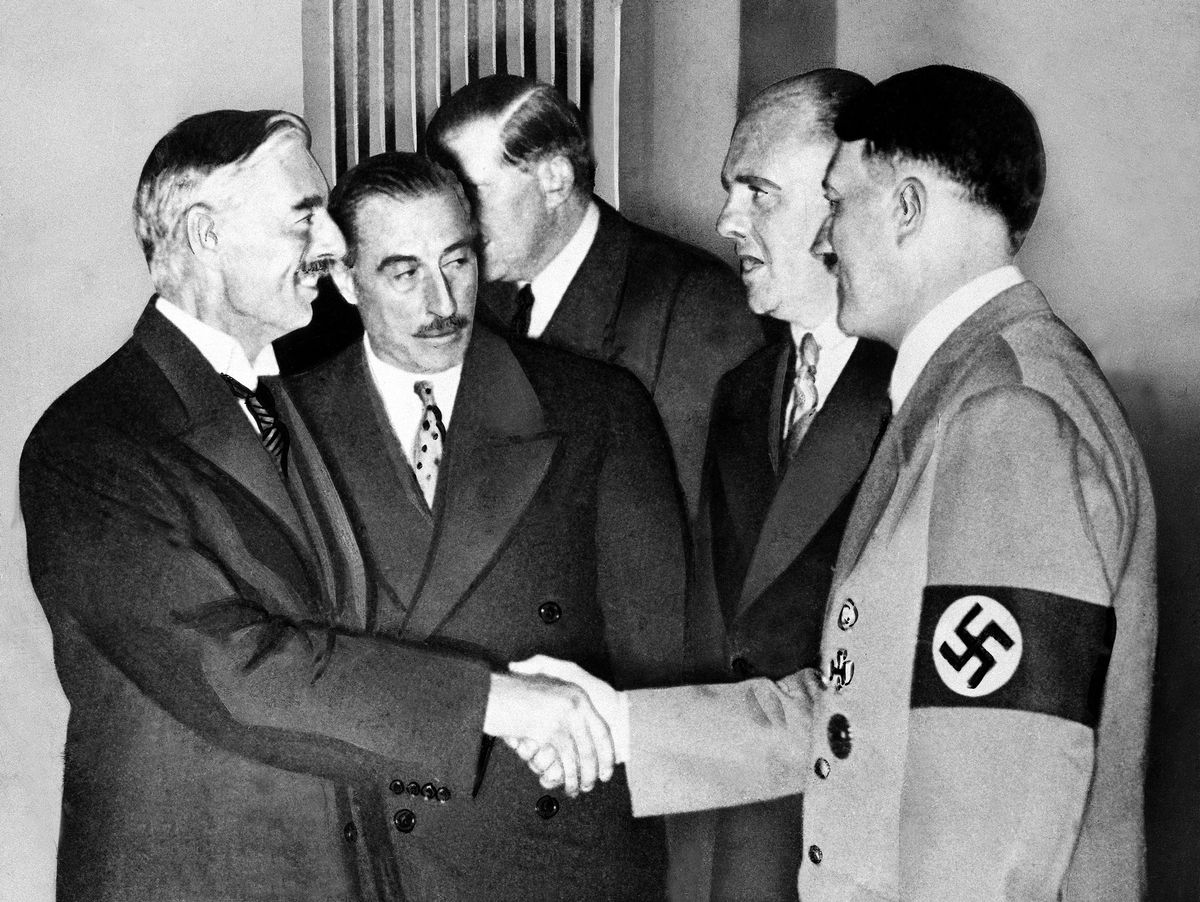
The history of the 20th century provides stark warnings about the dangers of appeasement and the importance of a strong, united response to authoritarian aggression. In the 1930s, the policy of appeasement, most notably pursued by Britain and France, allowed Nazi Germany to expand its power unchecked. The Munich Agreement of 1938, which ceded the Sudetenland to Hitler in the hopes of securing “peace in our time,” only emboldened the Nazi regime. This concession did not prevent war; instead, it paved the way for the invasion of Poland in 1939 and the onset of World War II. The lesson was clear: when democracies fail to confront aggression early, they invite greater conflict later.
Similarly, after World War II, the Soviet Union took advantage of the political vacuum in Eastern Europe to impose communist regimes across the region. The Iron Curtain descended over half of Europe as the Soviet Union absorbed independent countries into its sphere of influence, often with little resistance from the West. The West’s initial hesitation to confront Soviet expansionism allowed the USSR to solidify its control over Eastern Europe, leading to decades of Cold War tension.
These historical examples underscore the dangers of isolationism and the failure to support fellow democracies in the face of authoritarian threats. They also highlight the critical role that alliances, like NATO, have played in countering such aggression and maintaining global stability.
The Role of Alliances in Countering Aggression
NATO, established in the aftermath of World War II, has been a cornerstone of global security and a bulwark against authoritarianism. The alliance’s collective defense principle, enshrined in Article 5 of the NATO Treaty, has deterred aggression against member states for decades. During the Cold War, NATO’s unity and strength prevented the Soviet Union from expanding its influence further into Western Europe, maintaining a precarious peace that ultimately led to the collapse of the Soviet Union.
In the contemporary context, NATO’s role remains as vital as ever. Russia’s invasion of Ukraine in 2022 has been the most blatant act of aggression in Europe since World War II, threatening not only Ukraine’s sovereignty but also the security of the entire region. NATO’s response—coordinated sanctions, military aid to Ukraine, and a reinforced presence in Eastern Europe—has been crucial in supporting Ukraine’s defense and signaling to Russia that such aggression will not go unchallenged.
The Dangers of Isolationism and Domestic Distractions
Despite these clear historical lessons, isolationist sentiments periodically resurface in democratic nations. In the United States and Canada, there are recurring debates about the merits of focusing inward, prioritizing domestic issues over international engagement. While addressing domestic concerns is undoubtedly important, history shows that neglecting foreign policy can have disastrous consequences.
The rise of authoritarianism today, whether through Russian expansionism or Iranian regional ambitions, is a threat that cannot be ignored. Isolationism, though appealing to some as a way to avoid foreign entanglements, would only embolden these regimes, leading to greater global instability and potential conflict. Democracies must remain engaged on the world stage, using their influence to support other democracies and counter authoritarian aggression.
Balancing Domestic and Global Responsibilities
Democracies face the ongoing challenge of balancing domestic priorities with global responsibilities. Progressive agendas that address social justice, economic inequality, and environmental sustainability are essential for a healthy democracy. However, these must be pursued in tandem with a robust foreign policy that supports global stability.
For instance, while it is crucial to address domestic inequality and climate change, neglecting foreign policy could allow authoritarian regimes to reshape the global order in ways that undermine these very goals. A strong, values-based foreign policy that supports democracy and counters aggression abroad is integral to safeguarding the conditions necessary for progress at home.
The Middle East and the Quest for Peace
The Middle East remains a region of significant geopolitical importance and complexity. The Israeli-Palestinian conflict, in particular, is a long-standing source of tension that impacts global security. A sustainable peace in this region is essential for broader stability, and a two-state solution that provides both Israelis and Palestinians with security and sovereignty is widely viewed as the best path forward.
Supporting a two-state solution requires a foreign policy that balances Israel’s right to security with the Palestinians’ legitimate aspirations for statehood. This approach not only seeks to resolve a critical regional conflict but also reinforces the broader principles of self-determination and human rights that underpin democratic governance.
The Necessity of Global Leadership
In conclusion, the foreign policies of democracies like Canada and the United States must prioritize the support of other democracies and the strengthening of alliances such as NATO. The historical lessons of appeasement and the consequences of isolationism provide a powerful reminder of what is at stake. In the face of renewed threats from authoritarian regimes, it is imperative that democracies stand together to defend the liberal, democratic world order.
By opposing isolationism, balancing domestic and global priorities, and supporting peace efforts in critical regions like the Middle East, democracies can ensure a more stable and secure world. The defense of freedom and democracy is not just a matter of national interest; it is a moral imperative that shapes the future of the entire world.